
Three months after the DCA collision, another aircraft and another missing transponder.
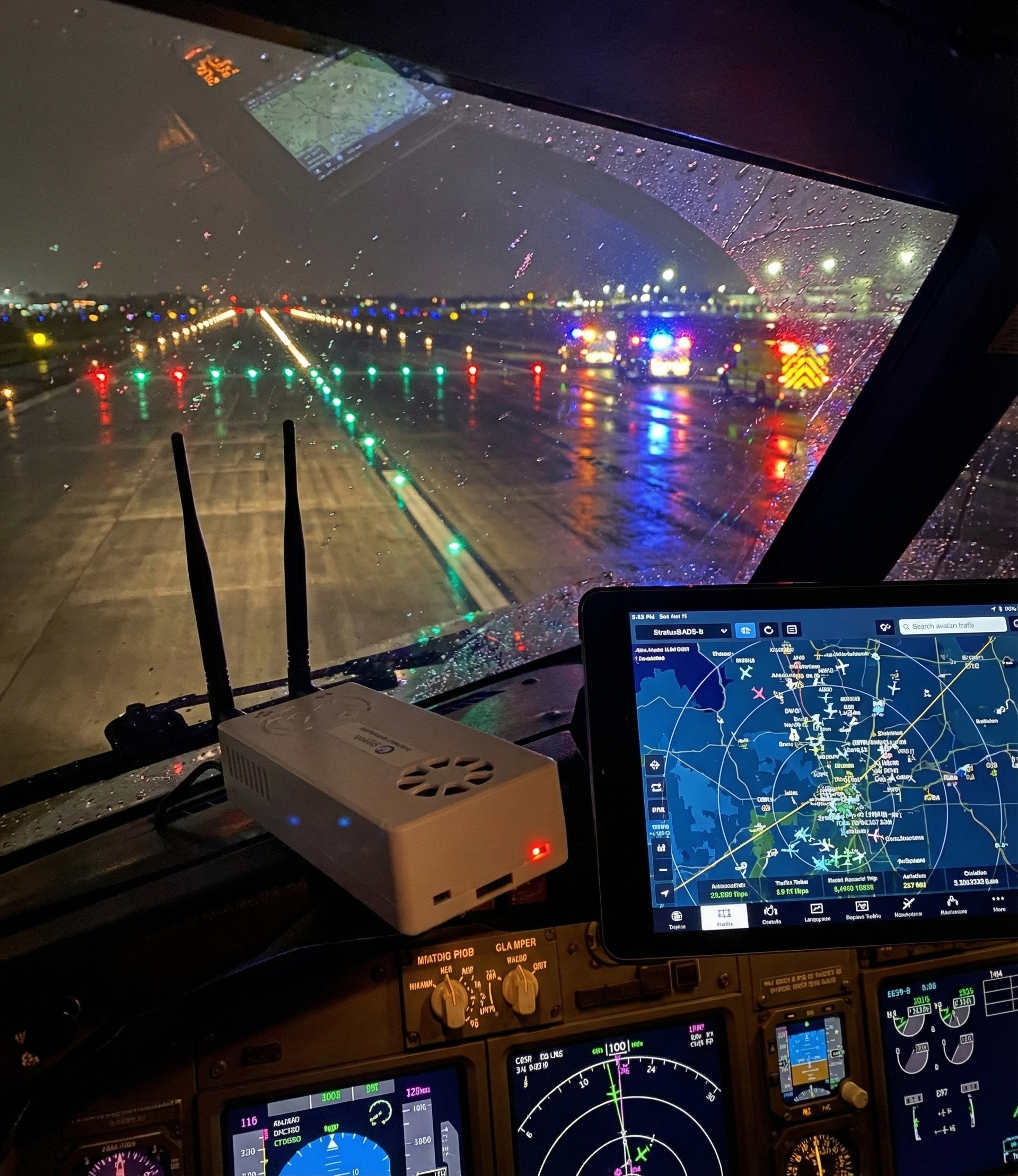
Late Sunday night, an Air Canada Express CRJ-900 on final approach to LaGuardia Airport’s Runway 4 struck a Port Authority fire truck crossing the runway. Both pilots were killed. Nine passengers remained hospitalized as of Tuesday. The fire truck crew survived.
The NTSB is investigating. What’s already known is striking: the fire truck had no transponder. ASDE-X — the Airport Surface Detection System that tracks aircraft and vehicles on the runway — did not generate an alert. The fire truck was cleared to cross the runway 20 seconds before impact. The jet’s crew had nine seconds of warning.
The System That Was Supposed to Prevent This
ASDE-X is the radar-based surface detection system used at LaGuardia and dozens of other major U.S. airports. In theory, it tracks everything on the surface — aircraft and ground vehicles — and warns controllers of potential conflicts before they become collisions.
NTSB Chair Jennifer Homendy said Tuesday that it didn’t work as intended: “ASDE-X did not generate an alert due to the close proximity of vehicles merging and unmerging near the runway, resulting in the inability to create a track of high confidence.”
In plain language: there were too many vehicles moving near the runway for the system to confidently track each one, so it gave up and generated no warning at all.
The fire truck also had no transponder. Homendy told reporters that a transponder could have helped trigger an alert on the runway warning system. Without it, the truck was effectively invisible to the automated layers of protection that were supposed to catch exactly this kind of situation.
“Controllers should have all the information and the tools to do their job,” Homendy said. “You have to have information on the ground movements, whether that’s aircraft or vehicles. This is 2026.”
This Is the Third Major U.S. Aviation Collision in 14 Months
The pattern is hard to ignore. In January 2025, an American Airlines regional jet and a U.S. Army Black Hawk helicopter collided on approach to Reagan National Airport, killing 67 people. The Black Hawk was not transmitting ADS-B Out — a legally mandated system for civilian aircraft — for months before the crash.
In February 2026, NTSB investigators were still working through the DCA wreckage when Congress debated the ROTOR Act, a bill that would have required ADS-B In receivers — the equipment that receives position data from nearby aircraft and vehicles. It failed to reach the two-thirds threshold needed for fast-track passage, though the debate continues.
Now LaGuardia. A truck without a transponder. A detection system that failed to track it. Two more pilots dead.
What ADS-B In Does — and Doesn’t — Solve
It’s worth being precise here, because ADS-B In is not a cure for runway incursions. ADS-B is an airborne situational awareness system — it’s designed to show pilots the position of other aircraft transmitting ADS-B Out data. Ground vehicles, fire trucks, and airport equipment are not part of that ecosystem unless they’re specifically equipped with transponders that broadcast on the same frequencies.
What ADS-B In does do for general aviation pilots is give you real-time traffic awareness in the air: where other aircraft are, how fast they’re moving, their altitude. When the DCA Black Hawk wasn’t transmitting, the airline crew couldn’t see it. ADS-B In, had the helicopter been transmitting, would have shown the conflict before it was fatal.
The LaGuardia failure is different in mechanism but identical in theme: the information needed to prevent the collision existed in theory, but the technology chain broke down. ASDE-X failed to track the vehicle. The truck had no transponder. The controller had 20 seconds and the wrong information.
For GA Pilots: The Argument Hasn’t Changed
After DCA, pilots who hadn’t thought much about ADS-B In started thinking about it. After LaGuardia, the same conversation is happening again — and it should.
The ROTOR Act debate established one thing clearly: the NTSB Chair testified before Congress that a $400 portable ADS-B In receiver connecting to an iPad is the practical, affordable path for general aviation pilots. That’s not marketing language. That’s her testimony.
You don’t need a runway incursion system to benefit from ADS-B In. You need it for the same reason the DCA crew would have benefited: knowing where the traffic around you actually is, in real time, before ATC calls it out.
Stratux is an open-source ADS-B In receiver built on a Raspberry Pi. It receives both 978 MHz UAT and 1090 MHz ES traffic, connects to your iPad over Wi-Fi, and works with ForeFlight®, Garmin Pilot, WingX, and every other major EFB. No subscription. No sealed chassis. If something fails, you replace the part.
The Crew Dog Electronics Stratux with internal GPS starts at $439.99 — open source, repairable, no subscriptions.
The technology that prevents the kind of collision that killed those two pilots at LaGuardia isn’t ADS-B In — the fire truck problem requires a different layer of the system. But the technology that keeps GA pilots from becoming the missing aircraft in someone else’s investigation is exactly what ADS-B In provides.
See the Stratux ADS-B In receiver →
The Bigger Pattern
Three incidents. Three technology failures. DCA: military helicopter without ADS-B Out. LaGuardia: ground vehicle without a transponder, surface detection system that generated no alert.
The NTSB has been recommending broader ADS-B deployment since 2008. Eighteen years of recommendations. The technology is cheap, available, and proven. The gaps that keep producing these investigations are not engineering gaps — they’re adoption gaps.
Aviation safety tends to improve one accident at a time. That’s the nature of the system. The question GA pilots can answer for themselves — right now, without waiting for a mandate — is whether knowing where the traffic around them is worth $400 and a Wi-Fi connection.